01
IIoT ingestion and edge buffering
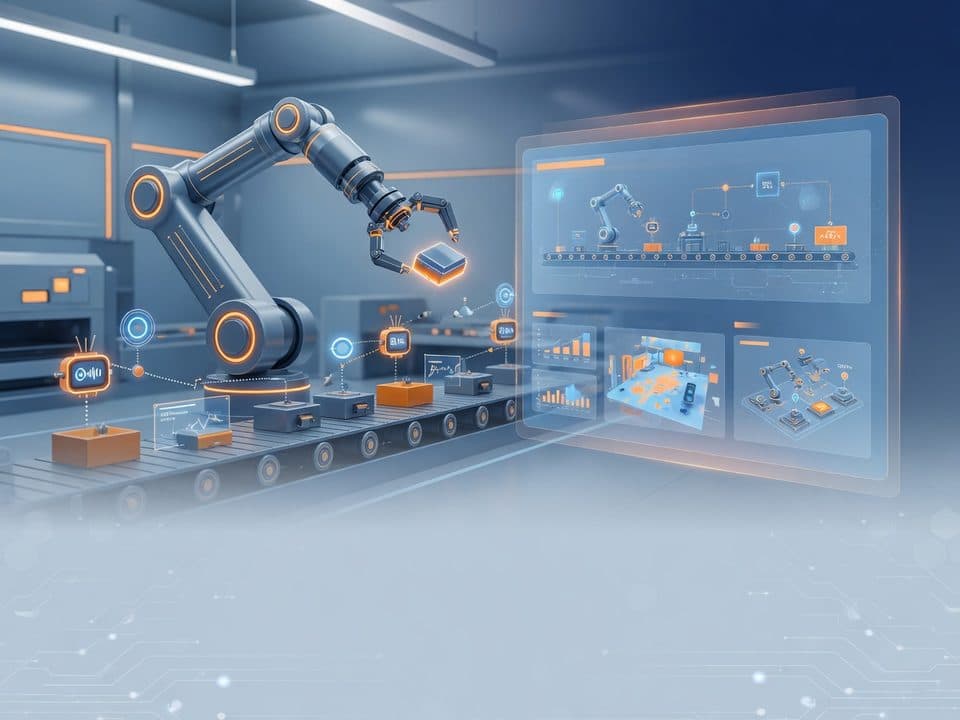
Collect machine, sensor, and line events with local buffering, time synchronisation, and protocols appropriate to the plant environment.
Industry focus
Operations software, IIoT data pipelines, and analytics that bridge plant-floor reality with IT systems, without pretending OT is just another cloud microservice.
Manufacturing IT succeeds when it respects OT constraints: intermittent connectivity, long equipment lifecycles, safety procedures, and MES or SCADA systems that cannot be casually restarted for a deploy.
We build data pipelines from industrial IoT and machine sources, integrate MES and ERP where needed, and deliver predictive maintenance and operational analytics with clear confidence bounds.
Digital twin concepts are useful when grounded in real assets and processes, not as marketing labels for a dashboard. We focus on measurable plant outcomes: downtime visibility, quality signals, and planning inputs.
How Technisal helps
We help manufacturers connect production data to decision systems while respecting OT/IT boundaries, security, and plant operations.
Collect machine, sensor, and line events with local buffering, time synchronisation, and protocols appropriate to the plant environment.
Work-order status, material consumption, and quality events exchanged with systems of record without brittle file drops as the only option.
Feature pipelines, anomaly detection, and maintenance workflows that start from failure history and sensor coverage you actually have.
Asset hierarchies, state models, and simulation-ready data products where they support planning, not decorative 3D alone.
Segmented network awareness, controlled data diodes or brokers, identity for industrial apps, and change windows aligned with production.
A practical path from shared understanding to durable outcomes in manufacturing.
Identify the bottleneck, unplanned downtime, scrap, changeover, or schedule instability, and map which signals already exist.
Define what leaves the plant network, in what form, and who operates the edge, before building cloud dashboards.
Treat work orders and inventory as owned domains; analytics should enrich them, not create a second conflicting truth.
Predictive alerts only help if technicians trust them and have a response path. Close the loop with feedback on false positives.
Production visibility grounded in real events
Leaders and supervisors see line status and quality signals tied to actual machine and process data.
Maintenance that is more proactive
Early warnings and better work-order context reduce firefighting when data and process maturity allow it.
Safer OT/IT collaboration
Clear boundaries and change practices so digital projects do not become plant-floor incidents.
Domain realities that shape architecture, compliance, and product choices, addressed explicitly in our work.
Predictive maintenance fails when failure modes are not instrumented. Invest first in the right measurements and labelling of work orders and downtime codes.
Availability and safety dominate. Patching, remote access, and vendor laptops need plant-specific controls; copy-paste cloud IAM is not enough.
Without a planning, training, or optimisation use case, twin programmes become expensive visualisation. Scope the decision the twin is meant to improve.
Rarely as a first step. We typically integrate with existing MES/SCADA and ERP, then add analytics, visibility, and selective process applications around them.
Yes. Most plants mix modern PLCs with older assets. We plan for protocol gateways, intermittent data, and manual overrides rather than assuming greenfield IoT everywhere.
We standardise data models and edge patterns while allowing site-specific line configurations, then roll out plant by plant with local champions and measurable pilots.
Describe your lines, systems of record, and the operational problem you need to move. We will propose a pragmatic OT/IT and analytics path.