01
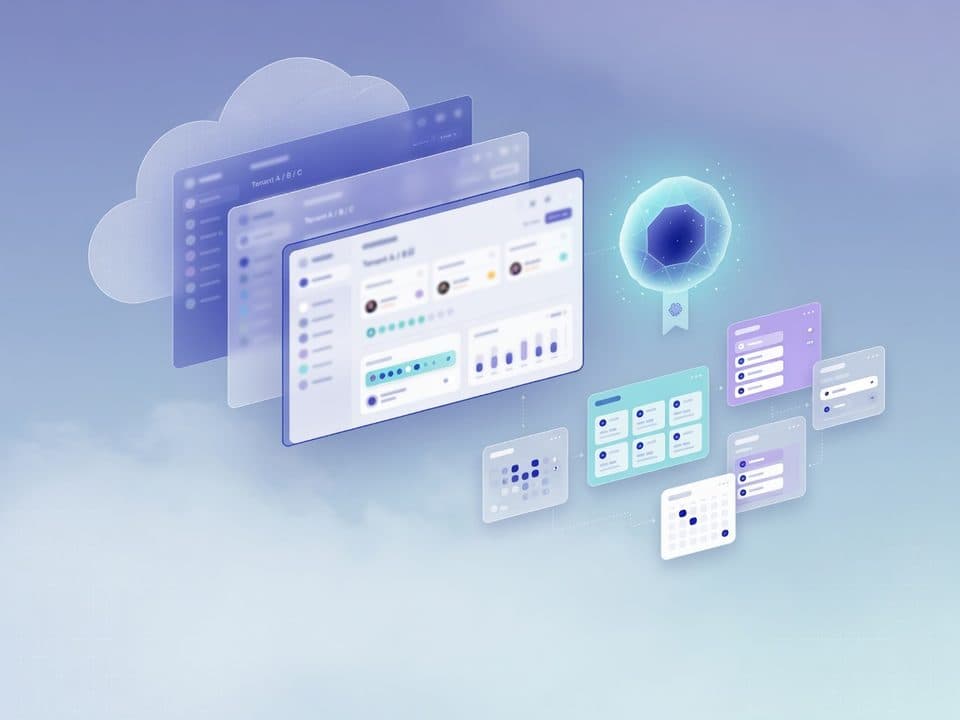
Multi-tenant isolation patterns
Shared schema with RLS/tenant_id, schema-per-tenant, or hybrid models, chosen against risk, cost, and migration reality.
Industry focus
Multi-tenant products with isolation you can defend, metering that matches pricing, and feature delivery that does not leak data across customers.
SaaS architecture is judged on quiet days: a support engineer must never see the wrong tenant; a noisy neighbour must not take down billing for everyone; usage metering must match the invoice customers expect.
We design multi-tenant foundations, row-level security or explicit tenant_id boundaries, subscription and usage billing, feature flags, and per-tenant observability, so product teams can ship features without reinventing tenancy each sprint.
Whether you are moving from single-tenant installs or scaling a shared pool, we make isolation, cost, and operability explicit design goals.
How Technisal helps
We help software businesses harden tenancy, billing, and platform operations so growth does not multiply security and support risk.
Shared schema with RLS/tenant_id, schema-per-tenant, or hybrid models, chosen against risk, cost, and migration reality.
Usage events, plan entitlements, proration, dunning hooks, and integrations with Stripe or enterprise invoicing flows.
Per-tenant and per-cohort flags, kill switches, and experiment plumbing that respect isolation and audit needs.
Org models, SCIM/SSO where required, invitation flows, and admin roles that map to how B2B buyers expect to manage access.
Metrics, logs, and traces tagged by tenant so support and SRE can diagnose without cross-tenant data exposure.
A practical path from shared understanding to durable outcomes in saas.
Write down isolation guarantees, shared resources, and failure modes before adding more product surface area.
Connect plan limits, feature flags, and usage meters so product, finance, and engineering share one definition of “what a customer can do.”
Migrations, flags, and canaries that can target cohorts of tenants without manual one-off deploys.
Support tooling, audit logs, and dashboards that answer “what happened for tenant X?” without elevated fishing expeditions.
Defensible data isolation
Access patterns and tests that reduce the chance of cross-tenant reads or writes as the team grows.
Billing that matches product reality
Metering and entitlements that cut down invoice disputes and manual finance corrections.
Faster safe releases
Feature flags and tenant-aware rollout paths that let you ship without all-or-nothing deploys.
Domain realities that shape architecture, compliance, and product choices, addressed explicitly in our work.
Row-level security fails if bulk jobs, admin tools, or analytics pipelines bypass it. Isolation must cover workers, reports, and support access, not only the public API.
Billable events should map to value customers recognise. Opaque micro-metrics create churn even when the system is technically correct.
Shared infrastructure needs quotas, rate limits, and cost visibility by tenant. Otherwise a single heavy customer becomes everyone’s incident.
It depends on compliance, scale, and ops maturity. We often recommend shared tenancy with strong isolation for most B2B SaaS, and dedicated databases for high-sensitivity or enterprise-mandated segments.
Yes. We plan data migration, identity model changes, and dual-run periods so customers move in cohorts with measurable isolation checks at each step.
Support access is tenant-scoped by default, audited, and time-bounded. We avoid global “super search” UIs unless they are tightly controlled and logged.
Share your current tenancy model, billing approach, and growth pressure points. We will propose isolation, metering, and platform improvements that match how you sell.