01
Domain-driven product design
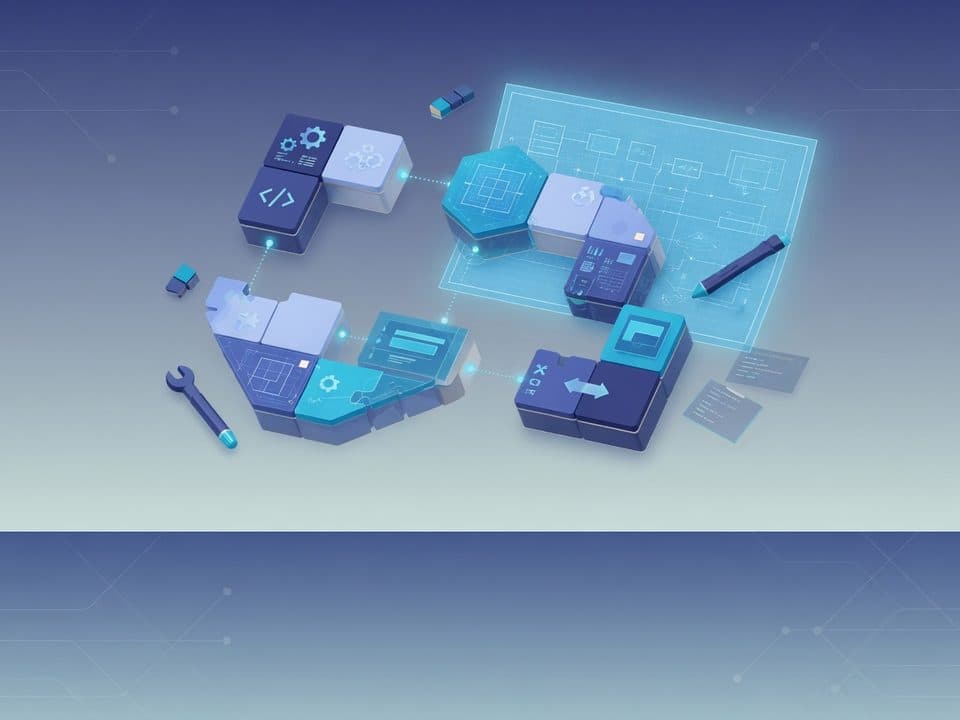
Workshops and modeling that turn real workflows into bounded contexts, permissions, and data ownership, not screens invented in isolation.
Service
Bespoke systems designed around your workflows, data models, and growth roadmap.
Standard SaaS is excellent until your process, data, or regulatory reality no longer fits the template. Custom software exists for those edges: internal platforms, domain-specific tools, and systems that encode how your organization actually works.
Technisal builds bespoke applications with the same rigor as product companies, clear domain models, integration boundaries, access control, and operational visibility, so custom does not become fragile.
We challenge build-versus-buy early. When we recommend custom work, it is because configuration, workflow engines, or integrations cannot carry the outcomes you need.
How Technisal delivers
We encode your domain carefully, integrate with the systems you already run, and deliver in increments that prove value before full scope commitment.
Workshops and modeling that turn real workflows into bounded contexts, permissions, and data ownership, not screens invented in isolation.
Admin consoles, case management, inventory and ops tools, and employee-facing systems that replace spreadsheets and brittle macros.
APIs, event hooks, and ETL patterns that connect ERP, CRM, identity, and third-party services without creating a new silo.
Configurable steps, approvals, and policy rules where business change should not require a full engineering release every time.
Testing strategy, documentation, and modular structure so custom software remains evolvable after the first go-live.
A practical path from shared understanding to durable outcomes in custom software development.
Map must-have capabilities against buy/configure options; only commit to bespoke build where it is justified by differentiation or constraint.
Capture entities, states, and handoffs with the people who run the process; identify exceptions that break generic tools.
Ship a vertical slice that runs the core workflow end-to-end, then expand modules with measured operational feedback.
Provide runbooks, admin guides, and knowledge transfer so your team can operate and extend the system confidently.
Software that matches the work
Fewer workarounds, less dual entry, and processes that live in the system rather than beside it in spreadsheets.
Integration without chaos
Clear contracts and ownership so custom modules enhance existing systems instead of fighting them.
Controlled cost of change
Architecture and configuration points that let common business changes happen without perpetual emergency projects.
Domain realities that shape architecture, compliance, and product choices, addressed explicitly in our work.
Industry experience with ERP and custom platforms shows that automating a broken process amplifies waste. Discovery that challenges exceptions, ownership, and success metrics is as important as code quality.
Bespoke systems require monitoring, security updates, and people who understand them. Responsible custom development sizes architecture and documentation to the team that will own the system after launch.
Where business rules change often, embedding them only in application code creates release bottlenecks. Selective use of rules engines, feature flags, and admin-configurable workflows is a standard way to keep agility without rewriting core logic.
When a mature product covers most needs, integrations are manageable, and customization would mainly recreate commodity features. We help make that call explicitly so budget goes to differentiation.
Yes. We prefer a core workflow MVP with clear expansion seams over multi-year big-bang programs that delay learning.
No. We write for handoff: readable structure, documented decisions, and operational guides. You can keep us for partnership or take full ownership with your team.
Describe the workflow, systems in play, and where off-the-shelf tools fall short. We will help you decide what to build and how to phase it.