01
Streaming ingestion and event backbones
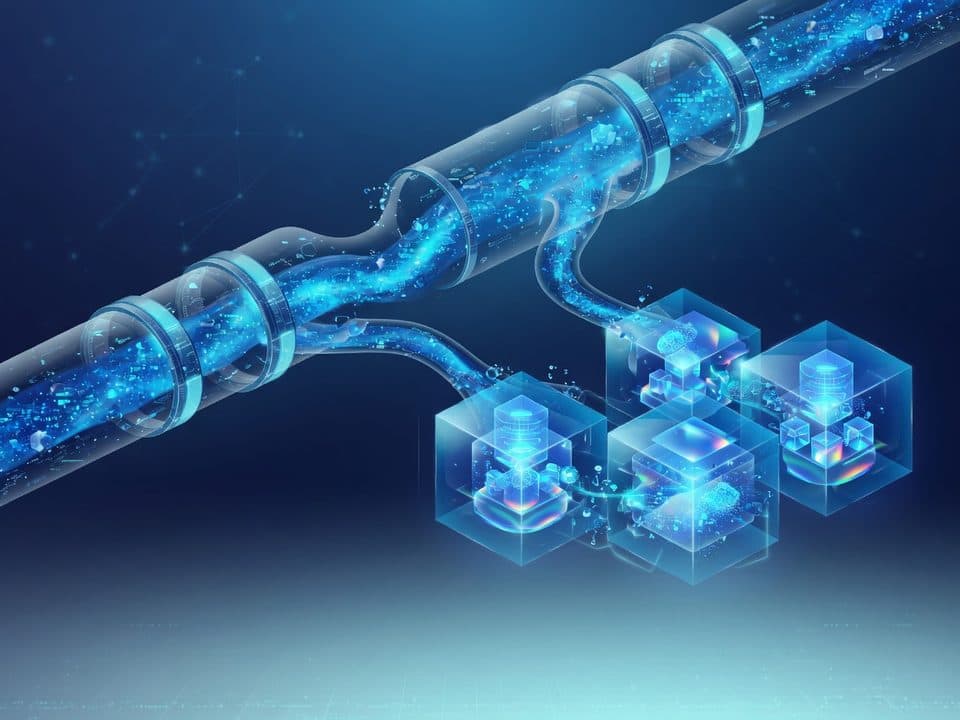
Kafka and managed streaming platforms for high-throughput event capture, topic design, retention policies, and consumer group patterns that keep producers and consumers loosely coupled.
Data platforms
Streaming and batch pipelines built to move, transform, and store large-scale data reliably.
High-volume data is only useful when it arrives complete, on time, and in a shape consumers can trust. Big data engineering is the discipline of designing those paths: ingestion, transformation, storage, and operational guarantees under real load.
Technisal designs stream and batch architectures around your latency needs, source systems, and governance constraints, not a single tool chosen first. We typically combine event streaming (for example Apache Kafka or cloud equivalents), batch and micro-batch processing, and durable lake or warehouse storage with clear ownership of schemas and quality checks.
The goal is a platform your teams can operate: observable jobs, documented contracts between producers and consumers, and a path from raw capture to analytics-ready and product-ready datasets without nightly firefighting.
How Technisal delivers
We treat pipelines as production software, with contracts, tests, and runbooks, so growth in volume does not mean growth in operational chaos.
Kafka and managed streaming platforms for high-throughput event capture, topic design, retention policies, and consumer group patterns that keep producers and consumers loosely coupled.
Scheduled and triggered jobs for historical loads, reconciliations, and heavy transforms, using engines suited to your stack (Spark, cloud dataflow services, or warehouse-native ELT).
Layered storage (raw, refined, curated) with partitioning, compaction, and format choices that balance cost, query performance, and schema evolution.
Versioned schemas, validation on write or in pipeline, and quarantine paths so bad records do not silently poison downstream models and reports.
Metrics, lineage-friendly job naming, alerting on lag and failure, and runbooks so on-call teams can diagnose throughput, backpressure, and late data without guesswork.
A practical path from shared understanding to durable outcomes in big data engineering.
Inventory systems of record, event volumes, freshness targets, and who depends on each dataset, then choose stream, batch, or hybrid paths deliberately.
Define schemas, ownership, retention, and land zones so raw fidelity and curated usability coexist without ad-hoc copies of the truth.
Implement ingestion, enrichment, and load steps with unit and integration checks, idempotency where needed, and clear failure handling.
Tune throughput and cost, add monitoring and alerting, document handoff, and run recovery drills before critical consumers go live.
Reliable data movement
Streaming and batch flows that meet agreed freshness and completeness targets instead of fragile scripts that break on volume spikes.
Clear producer, consumer contracts
Teams know what each topic or table means, how it changes, and how to evolve it without breaking analytics or product features.
Operable platforms
Jobs and topics you can monitor, scale, and recover, reducing dependency on a single engineer who “knows the pipeline.”
Domain realities that shape architecture, compliance, and product choices, addressed explicitly in our work.
Industry practice treats low-latency event processing and large historical reprocessing as complementary patterns (often called the lambda or kappa styles of design). Choosing one mode for every workload usually creates either cost waste or freshness gaps.
Research and field experience around data contracts show that silent schema drift is a leading cause of broken dashboards and models. Explicit versioning and compatibility rules reduce those failures as more teams publish data.
SRE and data ops guidance consistently ties pipeline reliability to lag metrics, failure rates, and lineage, not only to “job succeeded” status. Without those signals, large-scale systems become expensive black boxes.
It depends on latency, fan-out to many consumers, and whether you need an event backbone for products as well as analytics. We recommend streaming when real-time consumers and decoupling matter; warehouse-centric ELT when reporting freshness in minutes or hours is sufficient.
We design reprocessable pipelines with partitioned storage and idempotent loads where possible, so backfills and replaying a time window do not require reinventing the job. Strategy is agreed up front with source owners.
Yes. We integrate with major cloud streaming, orchestration, and storage services and will not force a rewrite when your platform already fits the workload, we extend and harden it instead.
Tell us about your sources, volume, and freshness needs. We will outline a practical stream, batch, and storage design with a clear delivery path.