01
CI/CD pipeline engineering
Build, test, artifact, and deploy pipelines with clear environments, promotions, and failure diagnostics developers will actually use.
Service
CI/CD pipelines, infrastructure automation, and release processes that keep delivery fast and safe.
DevOps is not a job title or a tools checklist. It is the ability to change production frequently with confidence, through automation, feedback, and shared ownership between build and run.
Technisal implements delivery systems that encode quality gates: continuous integration, progressive delivery, infrastructure as code, secrets management, and observability that closes the loop after release.
We also practice DevSecOps realism: security scanning and policy checks in the path of delivery, so security is not a late gate that freezes shipping.
How Technisal delivers
We design pipelines and platform practices that match your risk profile, speed where it is safe, control where it is required.
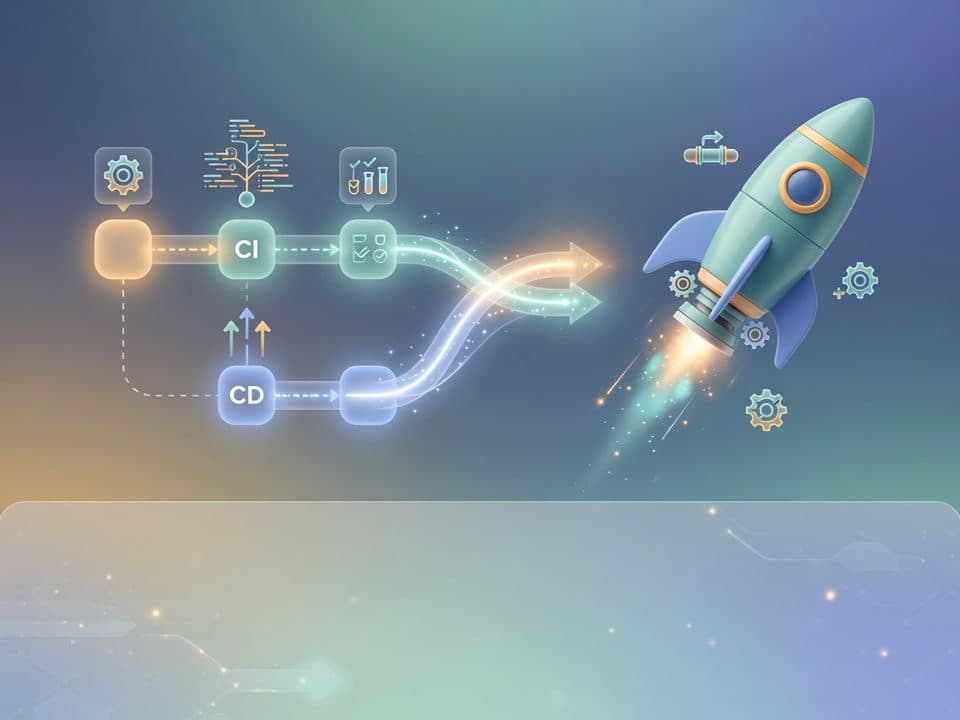
Build, test, artifact, and deploy pipelines with clear environments, promotions, and failure diagnostics developers will actually use.
Reproducible environments with reviewable changes, Terraform, cloud-native IaC, or your standard, paired with policy and drift awareness.
Blue/green, canary, feature flags, and rollback paths sized to product risk so releases are operations, not events.
Dependency scanning, SAST/DAST where appropriate, image signing, and secrets hygiene without turning CI into an unusable maze.
Self-service templates, golden paths, and documentation so product teams ship consistently without reinventing pipelines.
A practical path from shared understanding to durable outcomes in devops.
Map lead time, failure rate, recovery, and manual steps; identify bottlenecks and risky heroics in production changes.
Stabilize CI for mainline health, then continuous deployment to non-prod, then controlled production promotion.
Add tests, scans, and approvals proportional to risk; keep feedback fast so developers fix issues where they are cheapest.
Connect deploy metadata to monitoring and on-call so incidents point back to change, and teams learn from production.
Faster, safer releases
Smaller changes ship more often with automated checks and known rollback paths.
Less environment drift
Infrastructure and config managed as code reduce “works on my machine” and snowflake prod.
Shared ownership of production
Build and run see the same pipelines, metrics, and incident signals, fewer handoff black boxes.
Domain realities that shape architecture, compliance, and product choices, addressed explicitly in our work.
DORA-style research has long associated high deployment frequency and short lead times with teams that also recover faster and maintain change failure discipline, when automation and quality practices mature together, not when speed is pursued alone.
Over-engineered CI with flaky tests and unclear ownership slows delivery more than manual steps. Pipelines need reliability SLOs, ownership, and pruning of low-value gates.
Shifting security checks left, dependency and secret scanning, least-privilege deploy identities, reduces last-minute audit fire drills and is a standard DevSecOps pattern across regulated and commercial teams.
No. DevOps is about flow and feedback. Containers and orchestrators help some products; others thrive on simpler PaaS or VM automation. We match tooling to scale and skills.
Yes. We often start by stabilizing flaky CI, clarifying environments, and introducing progressive delivery before replacing entire toolchains.
We encode required reviews and evidence in the pipeline, change records, artifact provenance, and environment separation, so audit needs do not mean manual copy-paste theater.
Describe your current release process and pain points. We will design automation and practices that speed delivery without gambling production.